
6 min read
What is an SCR system and how does AdBlue work?
Turning exhaust nitrogen oxides into harmless nitrogen and water vapour comes down to a single chemical reaction. Understanding the logic makes choosing the right product much easier.
Diesel engines consume less fuel than petrol engines, but because they run at high temperature and pressure they produce more nitrogen oxides (NOx) in their exhaust. NOx is a pollutant directly linked to respiratory illness and acid rain. Emission standards tightening from Euro 4 onwards pushed manufacturers to find a way of neutralising this gas while it is still inside the exhaust. The result was the SCR system.
What does SCR mean?
SCR stands for Selective Catalytic Reduction. It is "selective" because the reaction targets only the nitrogen oxides, leaving the other components of the exhaust gas untouched. The system consists of a catalyst placed in the exhaust line and an injector that sprays fluid just before it.
The fluid sprayed is a solution of 32.5% high purity urea and deionised water — known commercially as AdBlue; our product is called TRANSBLUE®. It does not mix with fuel, sits in a separate tank and never enters the engine; it works only in the exhaust line.
How does the reaction happen?
Sprayed into the hot exhaust gas, the solution first evaporates. Under heat the urea breaks down into ammonia and carbon dioxide. When the ammonia meets the nitrogen oxides on the catalyst surface the reaction completes, leaving only two harmless substances behind: nitrogen gas and water vapour. Around three quarters of the atmosphere is already nitrogen gas.
How much is consumed?
Consumption is typically between 3% and 6% of fuel consumption. A vehicle burning 100 litres of diesel uses roughly 3-6 litres of solution. The ratio varies with vehicle type, load, driving style and engine operating temperature. In stop-start city traffic the ratio is usually higher.
When the tank empties the vehicle warns the driver. If the warning is ignored, most vehicles progressively reduce engine power and beyond a certain point will not restart. This is not a fault — it is a deliberate restriction imposed by the manufacturer to maintain emissions compliance.
Which vehicles have it?
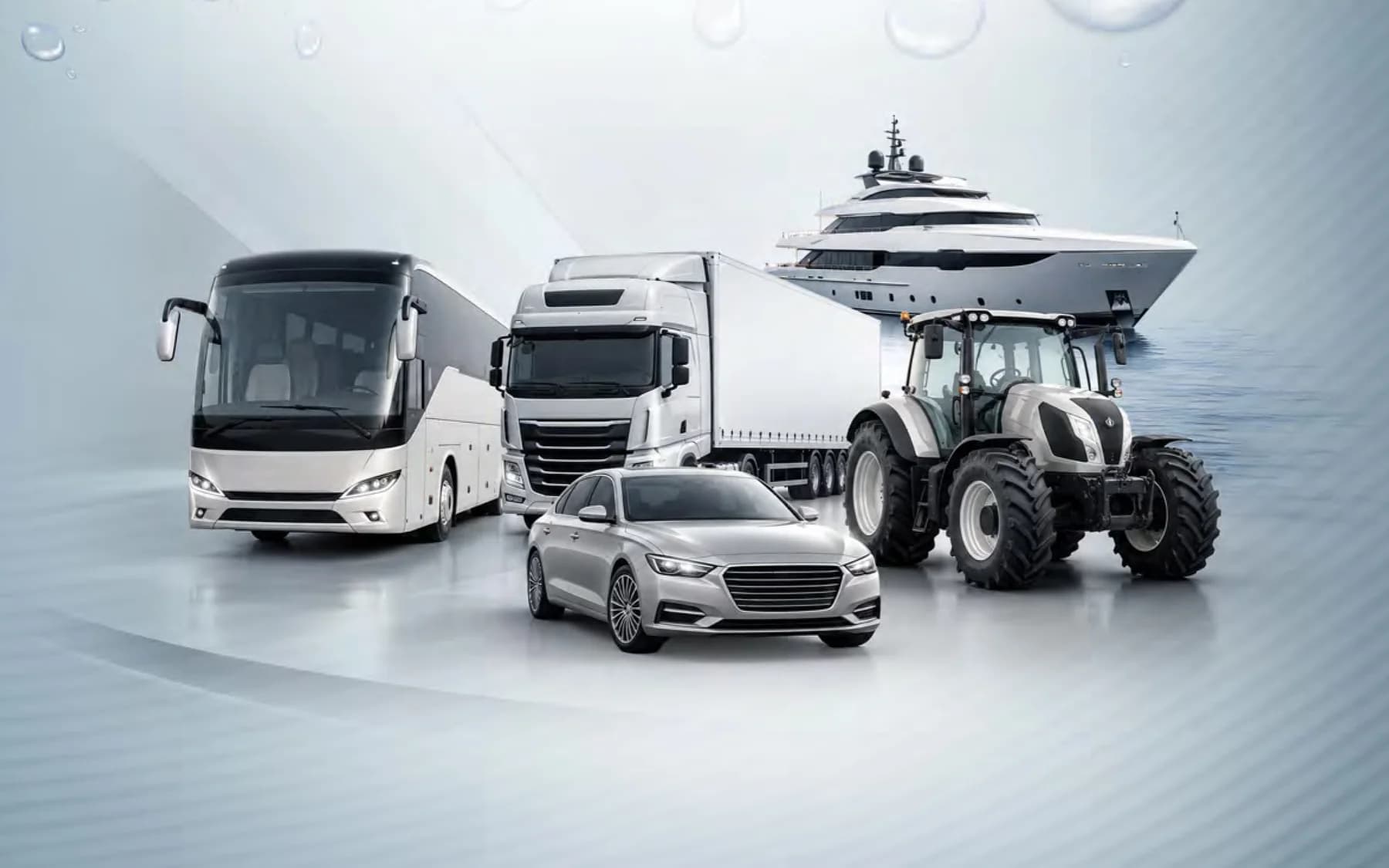
- Trucks, tractor units and heavy commercial vehicles
- Buses and minibuses
- Euro 4 and later diesel passenger cars
- Tractors and agricultural machinery
- Construction and mining machinery
- Industrial diesel generators and some marine vessels
The easiest way to tell whether your vehicle has an SCR system is the second, blue-capped filler next to the fuel cap. The owner's manual normally has a separate section under "AdBlue" or "DEF".
Why is product quality such a topic?
An efficient reaction depends on the solution containing exactly 32.5% urea and nothing else. That is why the water must be deionised: calcium, magnesium and metal ions found in tap water accumulate on the catalyst surface and gradually render the system ineffective.
For this reason production follows the ISO 22241 standard, which defines not only the urea ratio but also acceptable contaminant limits. In the next post we look at what a low quality product actually does to a vehicle.
More posts
All posts
Looking for bulk supply for your fleet?
Uninterrupted TRANSBLUE® supply from our Antalya facility across Türkiye.